
1 – Open the packaging using the easy-open tab and DO NOT use your teeth, fingernails or other sharp objects.
Condoms are an effective barrier method for preventing sexually transmitted infections. In addition, they are usually readily available and free of charge. There are a number of teams across the country that distribute condoms – you can find them on our map.

Index
How was the condom invented?
There are records of the first condoms dating back to the Middle Ages, when these contraceptives were made from linen, animal intestines or even fish bladders.
Since then, much has changed, and once it became possible to produce latex – around 1920 – the first condoms appeared, which were more comfortable, thinner and more flexible.
Although they did not have a major impact on the habits of the time, with the emergence of the AIDS epidemic, the widespread use of condoms and the recognition of their benefits in protecting against HIV became undeniable.
Nowadays, you can find condoms made from different materials, in various sizes, with different lubricants, and even in shapes and colours to suit every situation.
There are several preventive methods you can use to prevent infection. The external (or male) condom is the most commonly used, but there are other options, such as the internal condom, for example.
Choose the best condom for you
Whichever condom you use should be a matter of personal choice. It’s important that it makes you feel comfortable and protected during sex.
There are some options that are better suited to certain activities:
- For example, for anal sex, it’s important to use an extra-strong condom, as it’s a more vigorous activity and therefore requires a more durable material.
- The same may apply if your sexual partner has a large penis.
- For vaginal or anal sex, it is recommended that you do not use flavoured condoms, as they can cause irritation in these areas.
- On the other hand, using a flavoured condom during oral sex can make the experience more enjoyable.
Tips to ensure your condom is in good condition
- Always check the expiry date.
- Check the condition of the packaging: squeeze it to see if there is any air inside. If there is no air, this is a sign that the packaging is punctured, and the condom may also be punctured. In that case, we advise you to use another one.
- Condoms deteriorate when exposed to heat and sunlight. It is important to store them in a cool place. The glove compartment of your car and your wallet are not the best places to keep them.
Condoms can be external (more commonly known as male condoms) or internal (usually referred to as female condoms).
Although external condoms are more commonly used, internal condoms can be an advantage in certain situations:
- It can be inserted up to 8 hours before sexual intercourse begins, whereas, to use an external condom, the penis must be erect. Imagine that you or your sexual partner has difficulty maintaining an erection just as you’re about to put on the external condom – this is a good option to overcome that.
- It can be used to protect against oral sex in both the vaginal and anal areas.
- In case of infection transmitted through contact, such as HPV and syphilis, it is safer because it protects an area that the external condom does not cover.
- If you are on your period, it is also a great option because it prevents menstrual fluid from entering during sex.
Tips to prevent condoms from breaking
- Never use two condoms at the same time (even if one is worn inside the other), as they rub against each other, causing the material to heat up and increasing the risk of breakage.
- Never use greasy lubricants such as vaseline, massage oils or similar products. Lubricants must be latex-compatible. Oily lubricants cause the latex to heat up, increasing the risk of the condom breaking.
- If you use oil-based massage products, wash the oil off your hands before putting on the condom.
- Avoid opening the packet with your teeth, nails or other sharp objects, so as not to damage the condom.
- Always ensure there is no air in the tip and that the condom is not pulled back too far. During penetration, the penis needs room to move, and at the moment of ejaculation, a reservoir for the semen is required.
- If sexual intercourse is prolonged, it is best to change the condom. If this is not possible, use plenty of lubricant.
How should you use a condom at work?
- Do not use a condom provided by the client unless you check its condition carefully. Furthermore, it is important that you put the condom on yourself, to prevent any attempt to undermine safe sex practices.
- Wait until the penis is erect before putting on the condom – otherwise, you won’t be able to unroll it properly, and it may easily slip off during penetration.
- If the client is uncircumcised, you will need to pull the foreskin back before putting on the condom.
- If you are using a male condom, do not apply lubricant directly to the penis, as this can cause the condom to slip off, increasing the risk of it breaking inside you.
- If you are using a female condom, apply lubricant inside the condom or directly to the penis to make intercourse more comfortable.
- If you feel that something has gone wrong when putting the condom on, take it off and put on another one. Take as long as you need and trust your instincts.
- If you change the area of penetration, try to change the condom. Avoid as much as possible switching from anal to vaginal or oral sex without changing the condom.
- Internal condoms can also be used for fisting (penetration with the hand and forearm) and footing (penetration with the foot).
- Always use a condom with sex toys and do not share them.
Female condom versus male condom
The female or internal condom is a barrier contraceptive method that was originally designed to be inserted into the vagina, preventing the exchange of fluids. However, its use has successfully gained popularity amongst the community of men who have sex with men.
The internal condom has certain advantages over the male or external condom.
The main benefit is that it can be inserted minutes or up to 8 hours before sexual intercourse. This means there is no need to wait for an erection, nor is there a need to pause to put the condom on.
For people who find external condoms too tight or uncomfortable, the female condom can be an excellent solution.
Many people wonder how to put on a female condom, but despite its less conventional shape, most models consist of a tube with a flexible ring at each end: one ring allows the tube to be inserted and prevents it from slipping out of place, whilst the ring at the other end prevents the condom from being pushed inwards during sexual intercourse – which makes it very secure.
Furthermore, the fact that it is made of polyurethane makes it perfect for people who are allergic to latex.
The male condom, on the other hand, is more widely used and easier to put on, provided the penis is fully erect, but it can also be uncomfortable and is more likely to break.
How much does a female condom cost?
Few pharmacies sell this type of condom, but it is usually available in sex shops.
However, its price – which typically ranges from €2 to €5 – means that many people do not use it, as it is much more expensive than the male condom.
We recommend that you contact one of the associations and NGOs listed on our map, as most of them distribute this contraceptive material free of charge, just as health centres do.
How to put on a condom correctly?
Ideally, you should practise putting on a condom in a more comfortable setting, such as with someone you trust or using a sex toy.
Recommended steps for putting on a male condom:
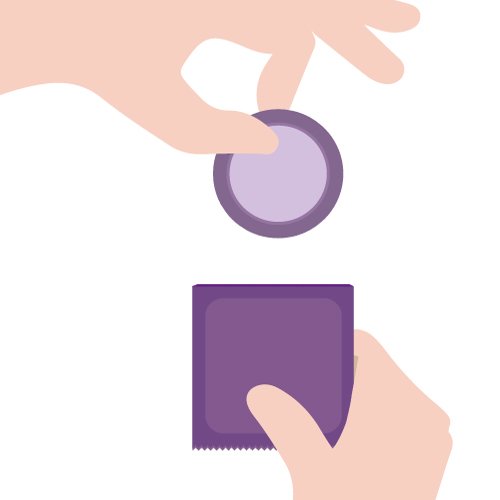

2 – Check which way round the condom is so that, once unrolled, the rim is facing upwards.
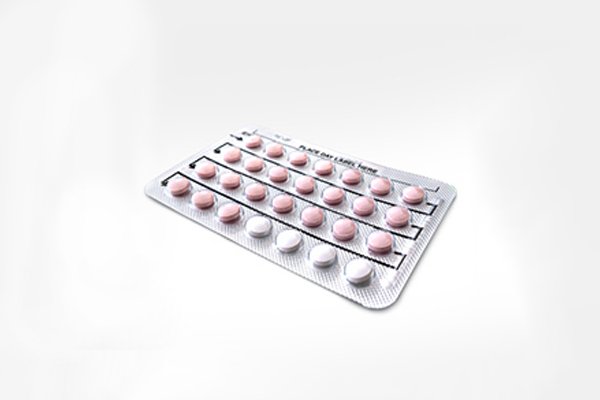
3 – Hold the tip of the condom with one hand and unroll it with the other, so that no air remains at the tip.
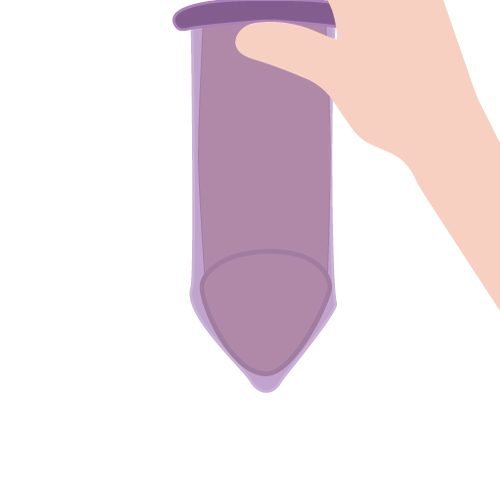
4 – After ejaculation, hold the condom at the base to prevent it from staying inside you.
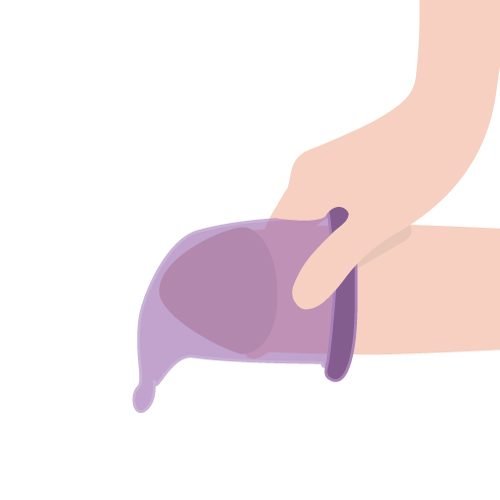
5 – Remove it carefully to prevent any leaks.
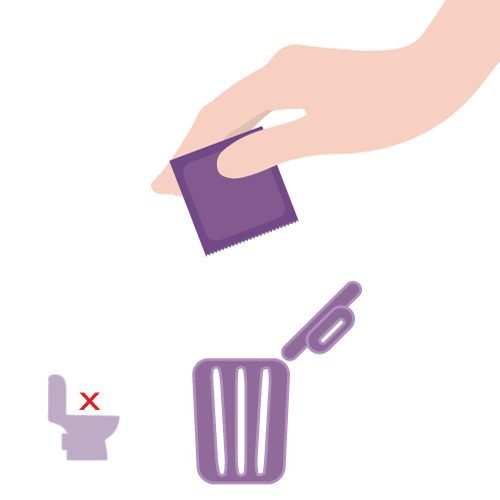
6 – Tie a knot in it and put it in the bin.
Recommended steps for inserting an internal condom:
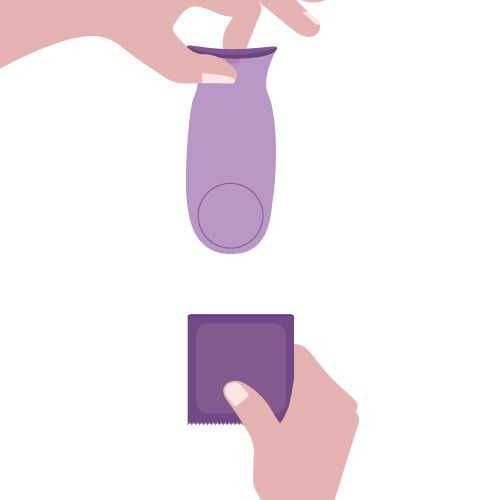
1 – Open the packaging using the easy-open tab and DO NOT use your teeth, fingernails or other sharp objects.
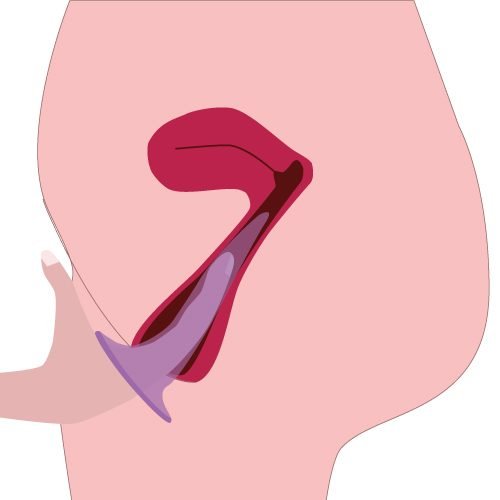
2 – Squeeze the inner ring or sponge of the condom, get into a comfortable position, insert it into the vagina or anus and push it in as far as possible. The outer ring should remain outside the body.
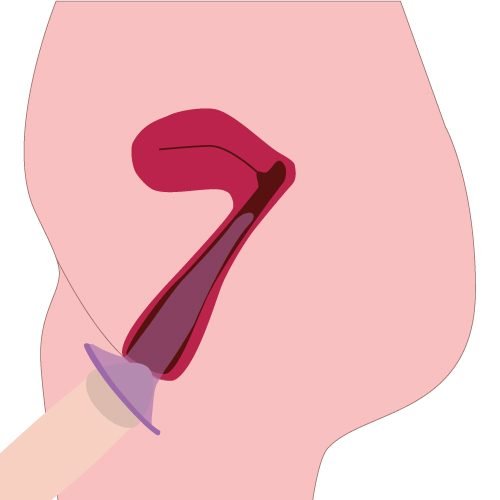
3 – On first penetration, or when you change position, guide the penis so that it enters the right place.
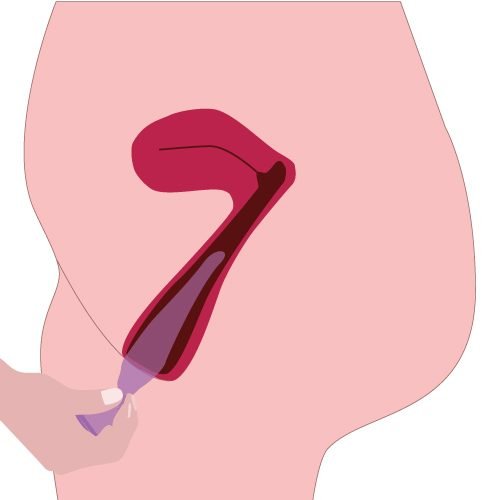
4 – After ejaculation, twist the outer ring (at least twice) and pull the condom off.
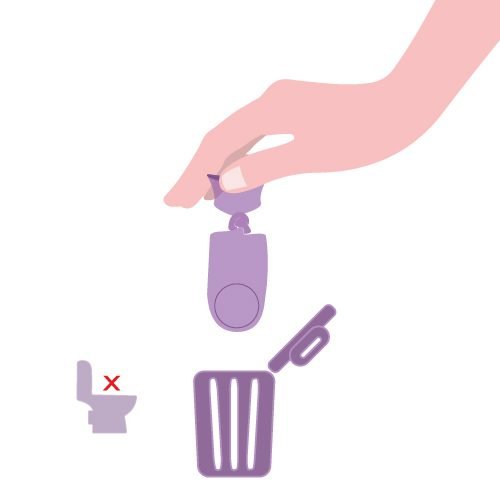
5 – Tie a knot in it and put it in the bin.
The condom broke – what now?
If the condom breaks or slips off, you are exposed to various sexually transmitted infections, but you also run the risk of an unwanted pregnancy.
Firstly, both you and your client should stay calm. The good news is that, by acting quickly, this risk can be reduced and some infections prevented.
.

Ideally, there should be a relationship of trust between you and the client. If so, you can ask them openly whether they usually engage in risky sexual behaviour with other partners and whether they are willing to have a screening test for sexually transmitted infections.
Try to find out as much as possible about your client’s sexual practices, because when you go to the hospital, you should explain everything to the infectious diseases specialist so that they can help you in the best possible way and advise you on PEP or taking emergency contraception.
When a condom breaks, it’s important to find a testing centre near you as quickly as possible – check our map to find out where you can get support and have tests.
What you shouldn’t do if the condom breaks
Do not wash your genital, anal or oral areas straight away. Although this is a common practice, it carries more risks than you might think:
- The force of the water can cause micro-tears in the skin, making it easier for microorganisms to enter your body and cause infections;
- Internal washing with water jets or other liquids can cause tears in the vaginal or anal mucosa, as well as pushing blood and semen further inwards, towards the uterus, increasing the risk of infection;
- Brushing your teeth can create cracks in the gums, allowing bacteria or viruses to enter your body.
What should you do if the condom breaks?
- Instead of washing your genital area, you should urinate immediately after the risky encounter, as urine flushes out any sperm that may be near the urethra.
- On the toilet, bidet or in the bath, squat down and push with your pelvic or anal muscles to expel all fluids and as much sperm as possible. Do not perform vaginal or anal douching. Instead, wash the outside of the labia and the anus with soap and water.
- Spit out or swallow any semen you have in your mouth. Keeping semen in the mouth simply increases its contact with the mucous membrane and raises the likelihood of infection. If you feel the need, rinse your mouth with a mild mouthwash (alcohol-free) or water, just to freshen up.
- As soon as possible (never later than 48 hours), go to a hospital A&E department to have the necessary tests and to assess whether you should have PEP or emergency contraception.